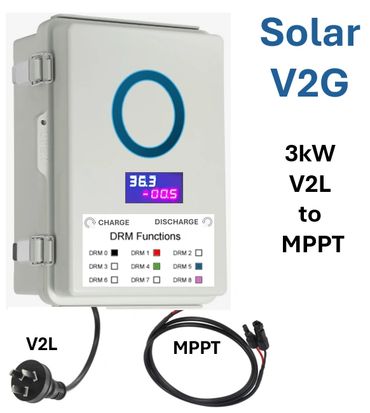
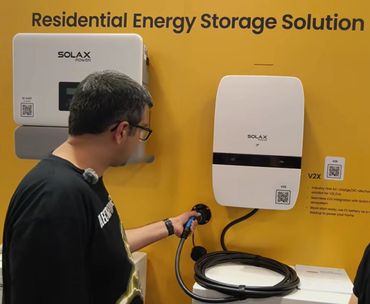
V2X has the potential of EVs to function as a home battery through bi-directional charging. Bi-directional charging technology allows an EV to both draw electricity from the grid to charge its battery and discharge stored energy outward to power external devices, a home, or the electricity grid. It enables EVs to store renewable energy generated by residential solar to power a home during periods of low energy generation (such as the evenings).
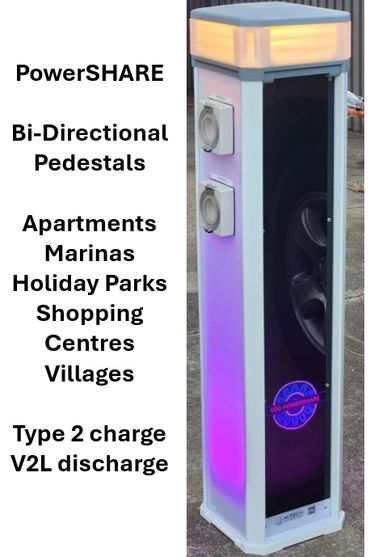
Bi-directional charging could be transformative in apartment buildings, as the volume of cars parked at any given time is likely to provide significant storage capacity.
Bi-directional charging supplants the need for a home battery by providing similar capabilities: Bi-directional charging offers 'significant benefits to the grid as well, enabling electric vehicles to act as mobile energy assets that can strengthen grid reliability and capacity'.
For apartments with embedded networks there is great opportunity for V2G since, as the commonality of EVs increases, for larger apartment blocks there will always be enough cars in the car park to supply the whole building 24 hours a day and enough cars parked during the day to charge on cheap or free solar from the grid.
Also, buildings with insufficient connection capacity for electrification would then have storage behind the meter/transformer to allow electrification.
With the impending "free electricity" tariffs in the middle of the day, most apartment dwellers will not be able to utilise them because they have few options to shift demand. An electric car would enable them to store the cheap energy during the day and run their apartments from the car at night.